Kick off the new year with a fresh learning opportunity!
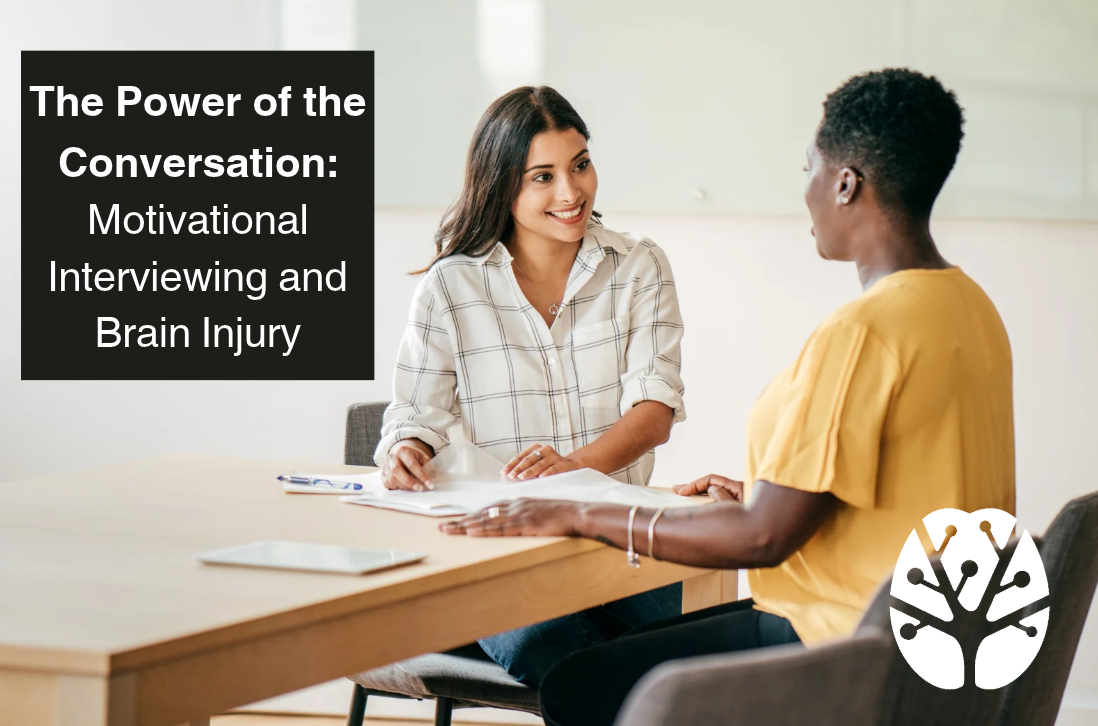
Join us January 20, 2027, from 1-2pm ET for a resource spotlight featuring Motivational Interviewing and Brain Injury (MoBI): A Guide to Supporting Change in the Criminal Legal System.
Brain injury can affect communication, memory, decision-making, and self-regulation — all of which can influence an individual's engagement with services and ability to achieve personal goals. Motivational interviewing offers a person-centered approach to building rapport, exploring readiness for change, and supporting meaningful progress.
Research is increasingly recognizing the potential value of motivational interviewing and other adapted psychosocial interventions for individuals with TBI, including applications related to mental health and substance use. A 2026 meta-analysis review identified 33 studies of psychosocial interventions for adults with moderate-to-severe TBI and mental health difficulties. MI was among the interventions showing promise (Carrier et al, 2026). The American College of Occupational and Environmental Medicine TBI clinical practice guideline recommends MI for individuals experiencing anxiety or depressive symptoms after TBI, while rating confidence in the evidence as low. It also identifies potential benefits for alcohol-related problems (ACOEM, 2025).
This session will explore key insights and practical strategies from the MoBI guide. Although the guide highlights criminal legal system contexts, its tools and approaches have applications across a wide range of settings and professional disciplines. You don't need to work in the criminal legal system to gain valuable, actionable insights!
Why this matters for professionals: The MoBI guide identifies important areas that can affect engagement, or misinterpreting someone's behavior as unwillingness, resistance, or lack of motivation, when brain injury-related challenges may be contributing.
Intended Audience: Though the guide is geared towards the criminal legal system, anyone working in brain injury across settings can benefit: criminal/legal, mental health/substance use, IPV, unhoused, rural health, older adults, child welfare, academic/sports, and vocational rehabilitation.
Presenters

Kelly Miller, MSW, joined NASHIA in June 2024 in the role of Senior Manager for Technical Assistance.
Kelly’s experience in the brain injury field began in 2020 as a Project Manager at MINDSOURCE, Colorado’s lead agency on brain injury. In that role Kelly supported the Colorado Advisory Council on Brain Injury, facilitated the creation of a new state plan on brain injury and managed multiple priorities related to the Administration for Community Living Brain Injury State Partnership Program Grant.
Kelly also worked in the criminal justice field for ten years as a Probation Supervisor in Colorado’s 5th Judicial District. Her areas of expertise during that time included juvenile justice, survivors rights, program quality assurance and motivational interviewing.
Kelly also brings twelve years of experience related to child welfare to her role. She began her career as a Social Worker in a residential program for adolescents in the late 1990s when people were still saying, “are we having fun yet” and “talk to the hand”. Roles that followed included Child Protection Caseworker; Youth In Transition Supervisor; Placement Services Supervisor and Executive Director of a child public interest agency.
Kelly is motivated by meaningful work and she is a social worker at heart.She earned a masters of social work degree from the University of Wyoming. The interconnectedness of brain injury within the criminal justice and child welfare systems led to Kelly’s career shift to brain injury focused roles.
Kelly lives in the mountains in Colorado. She enjoys hiking, crafting and spending time with her family which includes a 140 pound Rottweiler who loves cheese and snuggles.

Tim McGavin joined NASHIA as a Technical Assistance Supervisor in 2026 after serving 35 years in community supervision within DuPage County Probation, Illinois.
For almost 20 years, Tim served as Deputy Director at DuPage County Probation, where he managed the daily operations of the adult casework division including the Problem-Solving Courts (Drug Court, Mental Health, Veterans), High Risk Sex
Offender populations, Domestic Violence, Substance Abuse, and Mental Health caseloads, the Adult Redeploy Program and Intake proceedings. Prior to this, Tim worked as a supervisor in adult probation and within the juvenile justice system as a supervisor and line officer in juvenile detention.
Most recently, Tim led one of the nation’s first comprehensive efforts to implement brain injury screening, support and training among Problem-Solving Courts and Probation in DuPage County, IL. He also supported the creation of the first motivational interviewing guide, tailored to clients with history of a brain injury. Tim is motivated to expand this effort to counties and regions across the country. Tim is also certified trainer of the Ohio Risk Assessment System (ORAS) and has experience with a variety of actuarial risk assessment tools.
Tim received his Bachelor of Arts in Sociology with an emphasis in Criminology from Northern Illinois University in 1987.
In his free time, Tim enjoys traveling, golfing, playing pickleball and tennis, exercising, reading, and spending time with friends and family. Tim and his wife are the parents of three adult children and live in the Chicago area.
Cost/Certificate
NASHIA webinar attendance is always FREE!
Social Work CEs available:
$10 NASHIA Members
$15 Non-members
General Certificate available:
Free for NASHIA Members
$15 Non-members