
Moody Center
for Brain Injury Best Practices
ABOUT US
The goals of the Moody Center for Brain Injury Best Practices are:
The Moody Center for Brain Injury Best Practices is a collaborative hub dedicated to advancing excellence in brain injury care and support. We aim to empower individuals, caregivers, professionals, and policymakers with evidence-based practices and innovative solutions. By fostering interdisciplinary collaboration and knowledge translation, we aim to drive continuous improvement in brain injury care. Through research, education, and resource development, we strive to enhance the quality of life for individuals living with brain injury and their families. Our vision is to be a catalyst for positive change, driving systemic improvements and promoting resilience across the lifespan. Together, with subject matter experts with diverse perspectives, we seek to establish a comprehensive platform for best practices, advocacy, and support in the field of brain injury.
Promote Collaboration: Encourage teamwork and sharing of ideas among individuals, caregivers, professionals and policymakers to improve brain injury care and support.
Advance Evidence-Based Practices: Develop resources that are based on what we know works best, ensuring that individuals with brain injuries receive the most effective care possible.
Enhance Quality of Life: Through education and support, we aim to improve the lives of individuals living with brain injury and their families, fostering resilience and well-being.
Drive Systemic Improvements: Advocate for changes in practices to create a better environment for individuals living with brain injuries, promoting inclusivity and accessibility.
Establish Comprehensive Support: Develop a platform for best practices, advocacy, and support that addresses the diverse needs of individuals with brain injuries throughout their lifespan, ensuring they have access to the resources they need to thrive.
The 2026-2027 Moody Center for Best Practices cohort is here!
The focus for this cohort is on transitioning from post-acute care to the community after brain injury.
Learn More
RECENT EVENTS
New Cohort Announced!

Just Published!
On July 14th, 2026 the newest Moody Center for Brain Injury Best Practices cohort held their kick-off meeting at the Moody Neurorehabilitation Center in Houston, TX. The 2026-2027 cohort will be tackling the issue of transitioning from post-acute care to the community after brain injury. They will be examining education available for families and care partners of Individuals with brain injury, respite models for caregivers, effective supports for community living, and funding structures used by states to sustain reintegration. Stay tuned for updates on their work.
An archived webinar is available to learn more about this critical new resource!
Now Available!
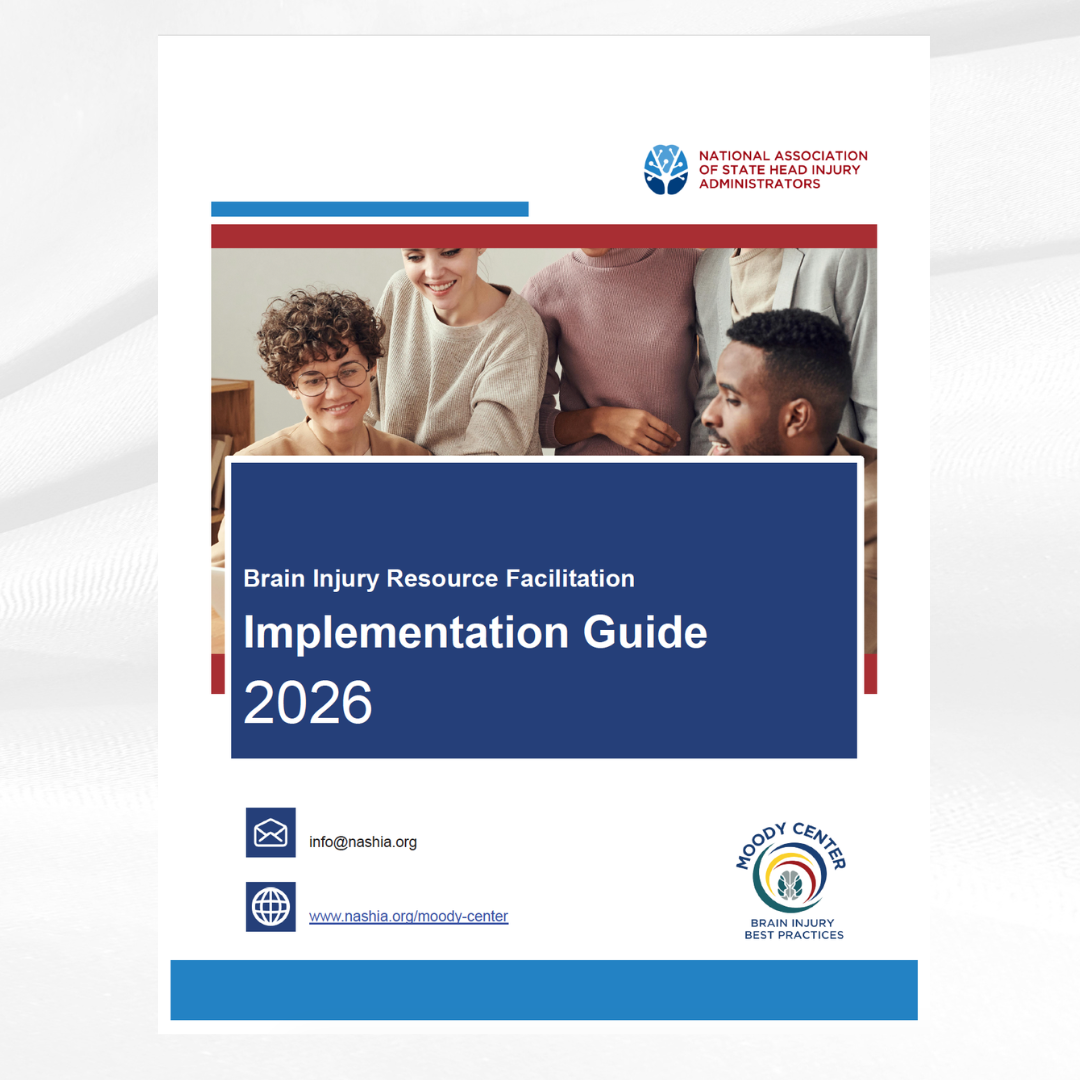
Brain Injury Resource Facilitation Implementation Guide
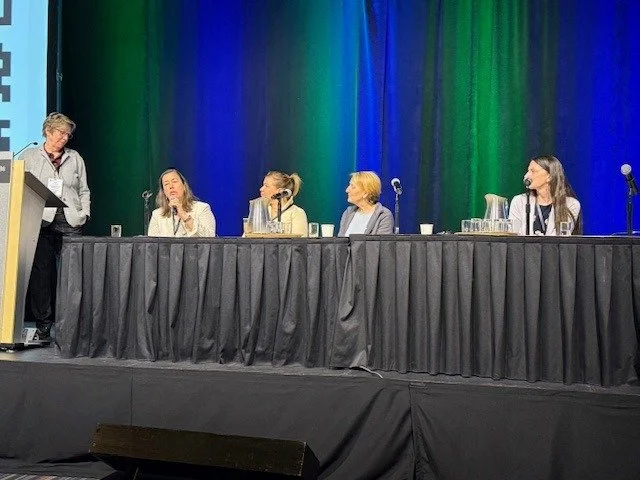
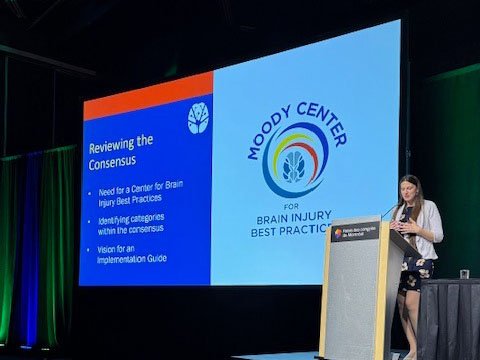
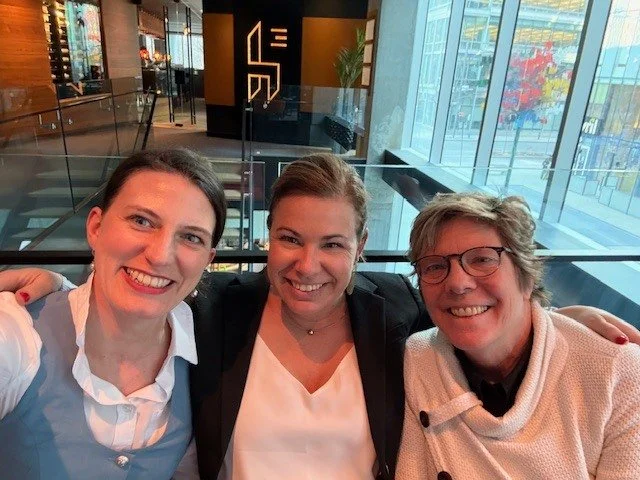
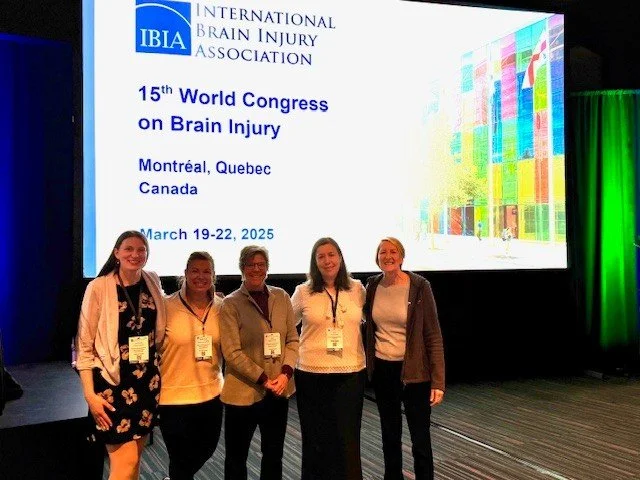
NASHIA's Executive Director Rebeccah Wolfkiel and Director of Technical Assistance and Special Projects Judy Dettmer traveled with Amanda Tower of MassAbility (in her role as a NASHIA Consultant) to the International Brain Injury Association Conference in Montreal.
Joined by Dr. Ana Durand and Dr. Flora Hammond, their presentation related to NASHIA's work to create best practices around brain injury resource faciliation - important work made possible with funding from The Moody Endowment.
It was an event full of meaningful conversations, shared expertise, and inspiring momentum for the future of brain injury services and support.
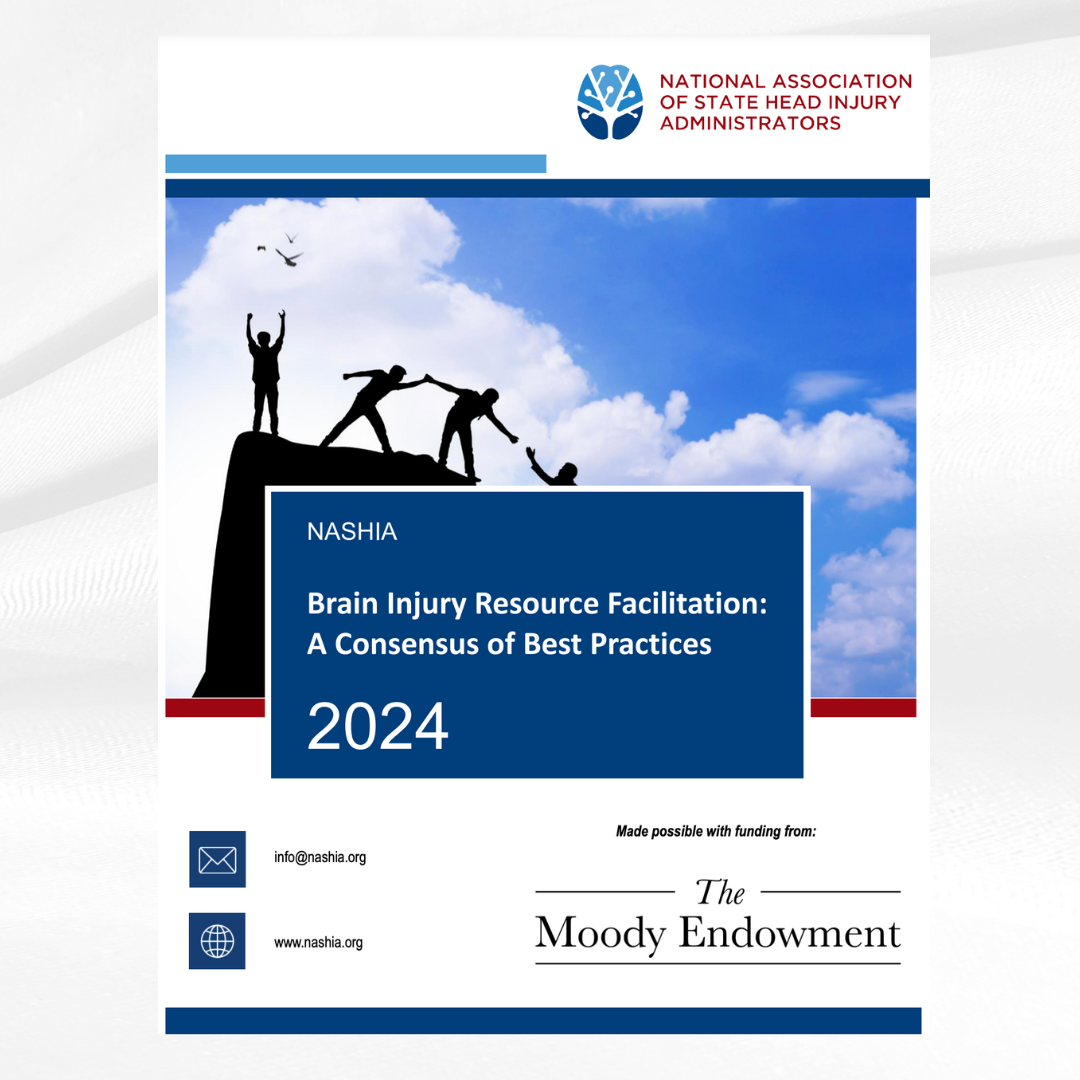
Brain Injury Resource Facilitation: A Consensus of Best Practices
2026-2027 Center Team
From top, left to right: Kent Hamstra (Craig Hospital), Meredith Brown (Moody Neurorehabilitation Institute), Rebecca Quinn (North Dakota Brain Injury Network), Detrick Gates (Shepherd Center), Lauren Horelka (Moody Neurorehabilitation Institute), Angelle Sander (TIRR Memorial Hermann), Stephani Kelly (Brain Injury Association of America), Daniel Hallila (Moody Neurorehabilitation Institute), Judy Dettmer (NASHIA), Megan Magalhaes (NASHIA), Amy Moffett (Missouri Dept. of Health and Senior Services), Erika Pae (Pennsylvania Department of Health), Wendy Waldman (Brain Injury Association of Indiana), Becky Wolfkiel (NASHIA), Ana Durand-Sanchez (Moody Neurorehabilitation Institute), Faydra Nabers-Allen (Moody Neurorehabilitation Institute), Jill Daugherty (NASHIA), Jodi Judge (Brain Injury Solutions), Liz Hardink (Maine Dept. of Health and Human Services), Cara Meixner (James Madison University), Steve Conner (Moody Neurorehabilitation Institute).
2024-2025 Center Team
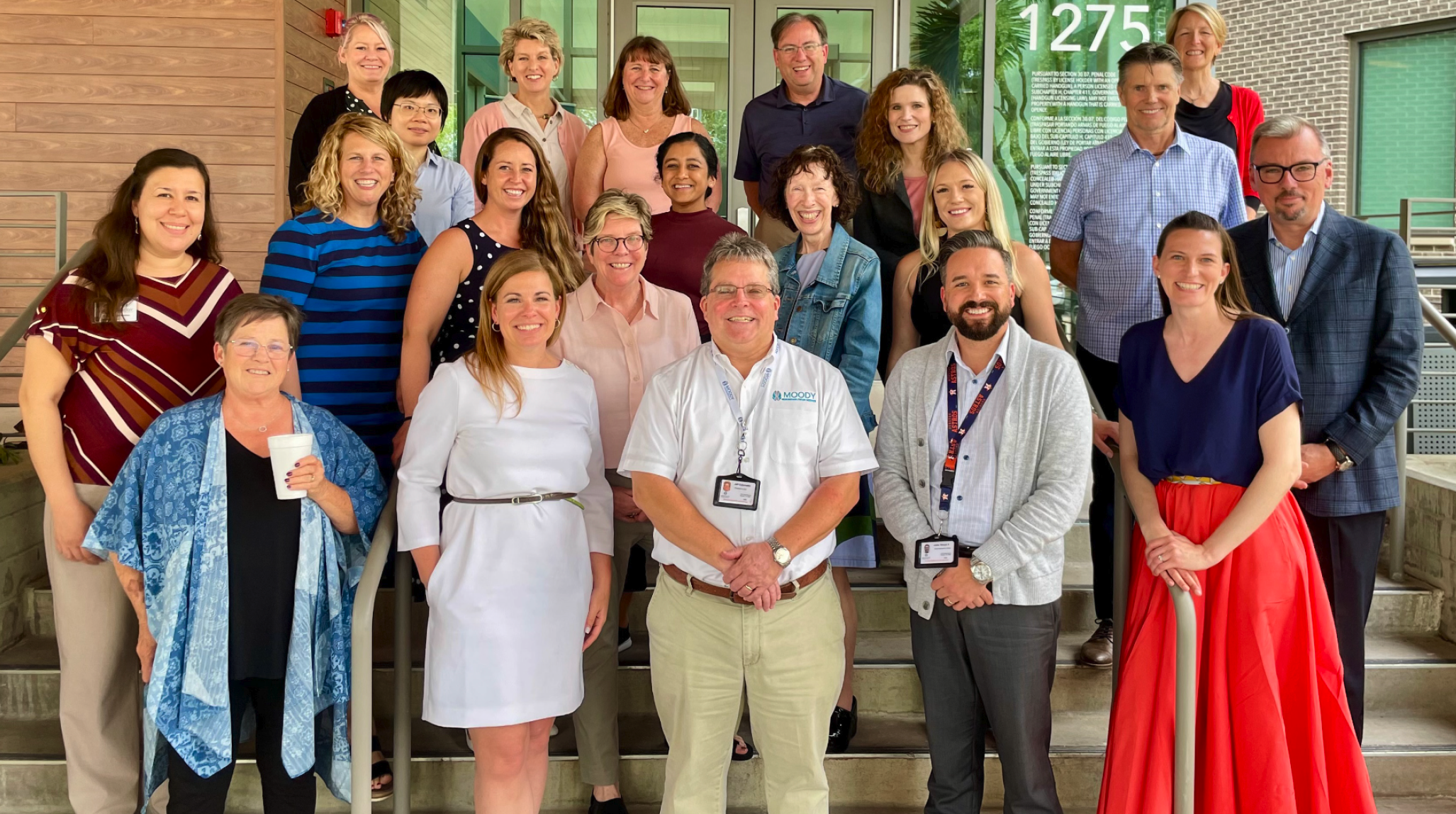
(From top, left to right): Traci Barney, Peggy Reicher, Erin Hall, Brad Donaldson, Dr. Flora Hammond, Dr. Bei Zhang, Stephanie Kelly, Gavin Attwood, Dr. Anna Duran, Maggie Ferguson, Brei Miller, Tulsi Pandat, Dr. Therese O’Neil-Pirozzi, Mikayla Florian, Rick Willis, Rhonda Alcorn, Rebeccah Wolfkiel, Judy Dettmer, Jeff Epinette, John Wood, Amanda Tower. Not Pictured: Dr. Kathryn Hyzak, Wendy Waldman
Brain Injury Resource Facilitation Implementation Guide
Evidence shows that Brain Injury Resource Facilitation improves return to work/school after brain injury and reduces recidivism among justice-involved individuals with a traumatic brain injury (TBI). It is also associated with decreased disability and reduced overall service needs for individuals. Because brain injury is now recognized as a chronic condition, Brain Injury Resource Facilitation serves as an ongoing approach to mitigate or manage long-term effects.
To strengthen consistency and quality, a national consensus was developed around:
Components of Brain Injury Resource Facilitation
Principles & approaches
Outcomes, measurements, & common data elements
In 2023, the National Association of State Head Injury Administrators (NASHIA) - funded by the Moody Endowment - led a Delphi Consensus process with national brain injury leaders, resulting in Brain Injury Resource Facilitation: A Consensus on Best Practices (the “Consensus” report). In 2024, Moody Endowment provided additional funding to NASHIA to establish the Moody Center for Brain Injury Best Practices. The first two-year cohort used the Consensus findings to develop this implementation guide.
The goal of this guide is to support programs with launching, expanding and sustaining a Brain Injury Resource Facilitation program. This guide provides recommendations and best practices and is not mandatory for implementation.
Supplemental Materials
Policy and Funding
Core Components and Approaches
Data and Outcomes
Delphi Consensus Project
In 2023, NASHIA was awarded a grant from the Moody Endowment to develop consensus related to the practice of resource facilitation. Elements for consideration included the name, core components, principles and approaches, evaluation and measurement, and data collection.
There is scientific support for the efficacy of resource facilitation to significantly improve return to work and school after brain injury, as well as to reduce recidivism among justice-involved individuals with TBI returning to the community. Additional findings also include a correlation between resource facilitation and a decrease in level of disability associated with brain injury, as well as reduction in services needed by individuals upon completion of the resource facilitation process.
Brain injury is now recognized by experts in the field as a chronic condition. Resource facilitation is seen as an approach to mitigate, or at least manage, brain injury as a chronic condition. As a result, there is a need to establish a consensus on best practices related to:
a) The components of resource facilitation;
b) The principles and approaches of resource facilitation; and,
c) The outcomes, measurements, and common data elements of resource facilitation.
To accomplish these objectives, NASHIA implemented a Delphi Consensus process with brain injury leaders across the country.

About Moody
The Moody Endowment improves lives through strategic grantmaking activity.
The purpose of The Moody Endowment is to provide support to organizations committed to the rehabilitation of individuals suffering from head injuries and related charitable, educational, and scientific activities.
The Moody Endowment is a not-for-profit organization that funds innovative brain injury research and life-changing rehabilitation activities to improve the lives of patients and their families. Through strategic grantmaking activity, we invest in organizations committed to rehabilitation along with scientific research to advance treatment, care, and therapies for survivors of brain injury.
With our philanthropy, we aim to better understand brain injuries and their affects. Not only do we support treatment and cognitive rehabilitation, we also seek to advance the way that rehabilitation is delivered. Fundamentally, we want to help those with disabilities live their best lives.
Learn More About the Moody Endowment
About NASHIA
Since 1990, National Association of State Head Injury Administrators has been fulfilling its mission of empowering state governments and their partners to enhance collaboration and strengthen capabilities to address the needs of individuals with brain injuries and their support systems.
Serving as the leading source of information and education for state employees who support public brain injury programs, NASHIA provides information on national trends, best practices, and state contacts to federal agencies, state and national associations and brain injury partners across the country. NASHIA provides technical assistance to state governments and their partners as well as collective representation on federal policy issues through its membership.
Join Us!
Interested in being involved in future Moody Center for Brain Injury Best Practices initiatives?