Training Archive
To view NASHIA’s full suite of free training content, visit our Youtube channel.
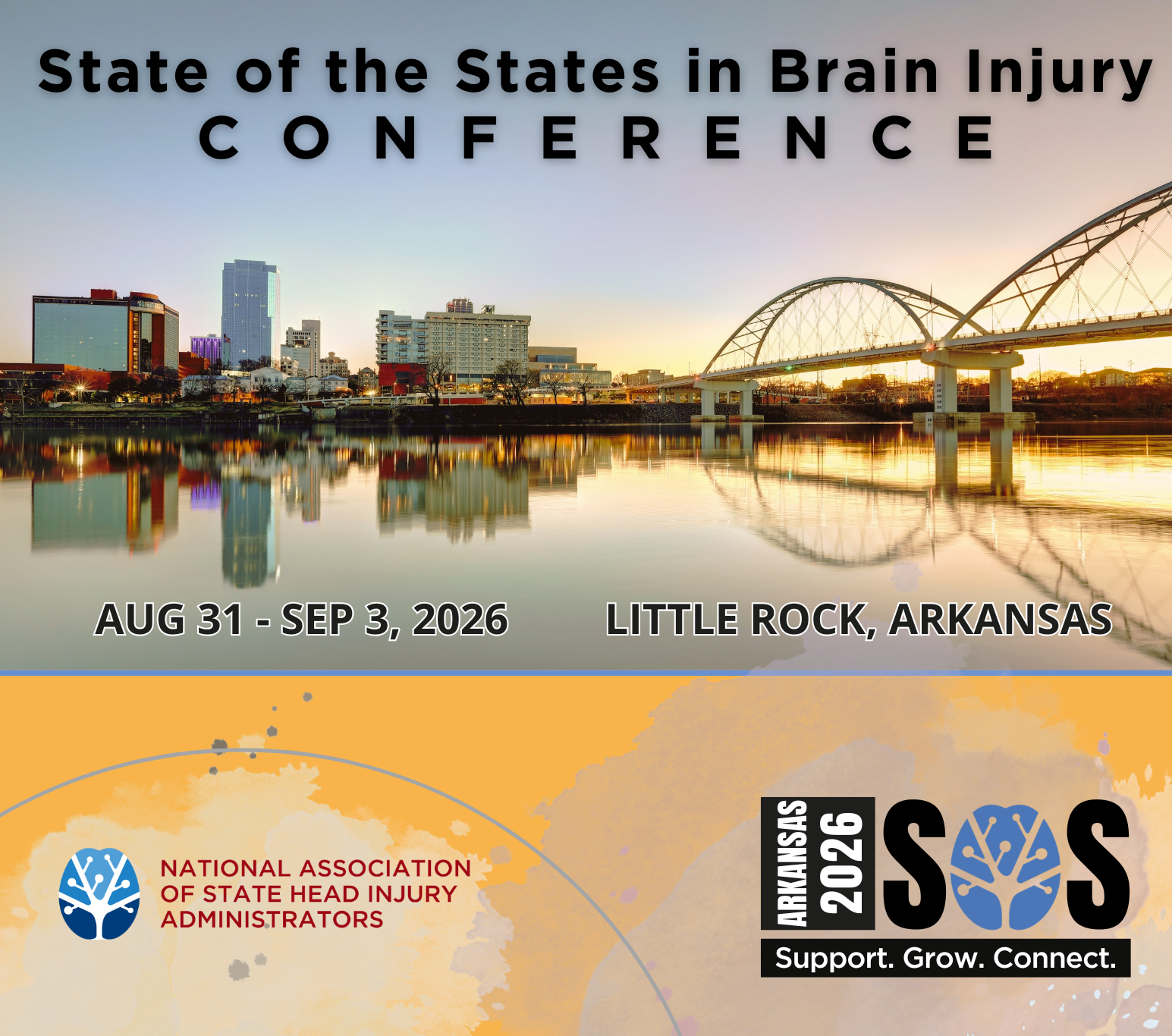
SOS 2026 is headed to Little Rock, Arkansas and registration is now open!
We’re excited to announce that our next SOS Conference will take place August 31 – September 3, 2026, in the heart of Little Rock. Known for its vibrant culture, welcoming community, and rich history, Little Rock will be the perfect backdrop for connection, collaboration, and inspiration.
In addition to the same great brain injury content you know and love, this year’s event will showcase 7 plenary sessions, 6 sets of concurrent sessions, and 4 engaging content tracks. Tracks in the Criminal Legal System (CLS) and Clinical Practices (CP) will weave throughout the entire conference, while a Behavioral Health track kicks off the week and a Medicaid/Long-Term Services & Supports track rounds off the latter half.
Individuals living with brain injury benefit from supportive approaches that extend beyond traditional clinical counseling. This session explores alternative intervention strategies that promote resilience, self-management, and community participation:
Faith-based counseling
Wellness and cognitive health coaching through speech-language pathology (SLP)
Innovative problem-solving and self-management interventions
An estimated 17–23% of U.S. service members and veterans experience a traumatic brain injury, and many also face co-occurring mental health challenges such as post-traumatic stress disorder, depression, and suicide risk—highlighting a critical need for coordinated, effective systems of care. This webinar explores innovative, collaborative approaches to advancing mental health and brain injury supports for service members, veterans, and their families.
Brain Injury Resource Facilitation is a structured intervention that connects individuals with brain injury to essential resources to enhance independence and improve outcomes, using a flexible, person-centered approach.
This dynamic discussion of BIRF and the new Resource Facilitation Implementation Guide is geared towards addressing these challenges and providing a map to follow for best practice in this area. Funded by the Moody Endowment and created collaboratively through NASHIA, this guide will be a current and future tool for consistent service delivery and data collection/utilization for rationale to sustain these supports.
Post-Traumatic Stress Disorder (PTSD) and brain injury (BI) often share overlapping symptoms, yet they are distinct conditions that require tailored approaches to screening, diagnosis, and treatment. This webinar will present an overview of PTSD, explore how PTSD and brain injury intersect in adults, and highlight critical differences between the two. Participants will gain insight regarding identification of each condition, and learn about evidence-based approaches for support. Designed for brain injury program staff and other community providers, this session will help participants strengthen understanding, improve treatment strategies, and promote integrated, person-centered care.

The National Association of State Head Injury Administrators (NASHIA) is pleased to announce the formation of a new Special Interest Group (SIG) focusing on the intersection of intimate partner violence and brain injury, through our organization.
NASHIA SIGs create a unique opportunity for colleagues nationally to network and collaborate on initiatives focused on outcome improvementfor individuals with brain injury. NASHIA SIGs are designed to catalyze communities around topics of interest, that discuss and further best practices for state governments to support individuals impacted by brain injury.
NASHIA Members Beth Dauber (MO) and Russha Knauer (CO) are leading this effort and are hosting a kickoff meeting for the new SIG on September 4, 2025 from 2-3 ET. We welcome NASHIA Members to join and learn more about what the focus and priorities of this effort will involve and indicate your potential interest.
As the population ages, the overall rate of brain injury in older adults in the US is increasing, and the intersection of brain injury and behavioral health becomes an increasingly critical topic. This webinar will provide an overview on the relationship between aging, brain injury, and behavioral health, highlighting the unique challenges older adults face and the strategies that can improve their quality of life. A brief introduction to the Aging and Behavioral Health Guide will be given, and attendees will learn more about tools and interventions that can support their work. National organizations who conduct work with the Aging Network and MH Systems will provide tips for initiating or improving partnerships within both state aging networks and behavioral health systems.
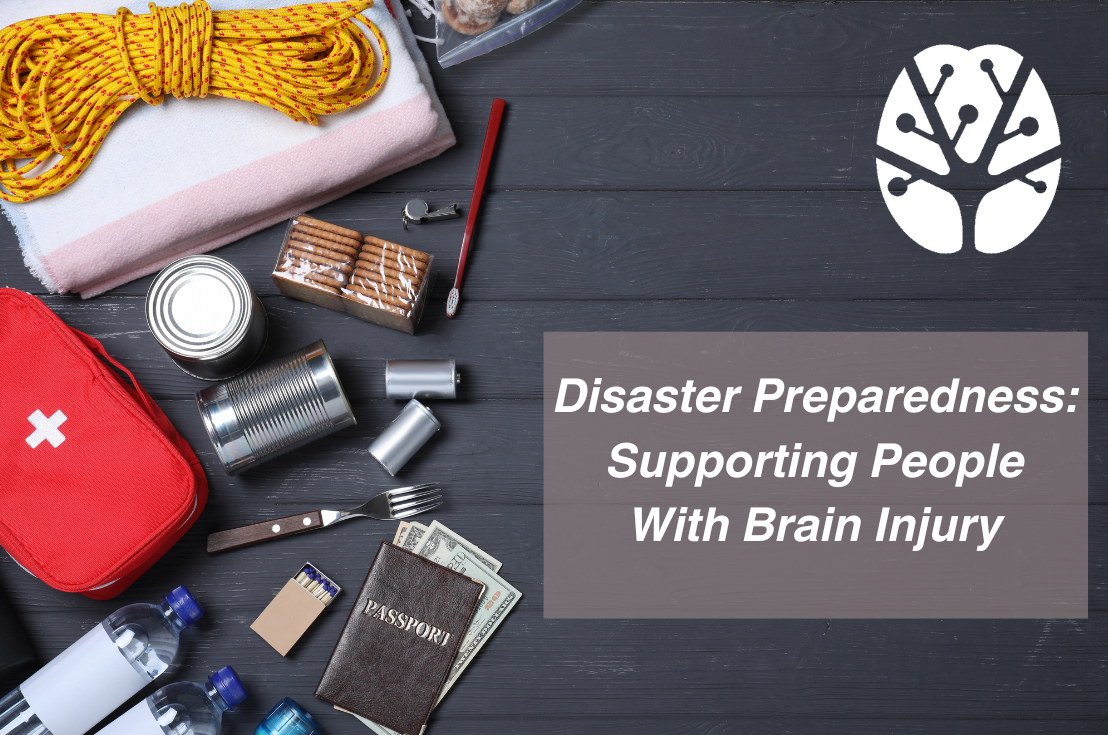
Join us for an engaging webinar exploring the critical functions of disaster and emergency preparedness in the context of supporting people with disabilities. We’ll dive into how emergency management is operationalized—from planning and preparedness to response and recovery—highlighting specific examples in behavioral health response planning, individual preparedness education, and Disability, Access, and Functional Needs (DAFN) sheltering. Special attention will be given to state and local preparedness efforts, caregiver readiness, and planning for special populations. This session will also provide practical strategies and resources, including how to connect with state and local emergency management colleagues, accessing FEMA training and toolkits, and ensuring a more informed approach to disaster resilience.
Since 2011, states and partners have been collaborating on issues impacting children and youth with brain injury and its impact within the school environment. NASHIA's first special interest group, NCCBI, continues to work to identify critical gaps in the continuum of services and supports, collaborate with national vital partner groups and establish common practices to make policy/research recommendations, and to share/develop resources on supports and services.
Join us as we share an overview of NCCBI’s history and purpose, a deeper dive of two main areas of focus, standards of practice and educational policy, and then discuss a call to action, and what that means for states and programs nationally.
Join us for an insightful Learning Session hosted by the National Association of State Head Injury Administrators (NASHIA) Medicaid Subgroup. This is your opportunity to gain crucial insights into what’s ahead for Medicaid in 2025, from Congress to the new Administration, and how these changes could impact brain injury programs and services.
This Learning Session is more than just a chance to learn, it’s an opportunity for you to engage, share insights, and hear what other states are expecting related to Medicaid and brain injury services. While this is hosted by our Medicaid Subgroup, it is available for all NASHIA membersand those interested in joining the organization.
The Center for Medicaid Services has new opportunities for supporting both youth and adults in reentry following criminal legal system involvement, including a new funding opportunity for State Medicaid Agencies to support their reentry initiatives. These are fantastic opportunities to secure both support from your Medicaid partners and funding for programs that benefit individuals with brain injury that have criminal legal system involvement.
This session is ideal for states at all stages of developing support for people with criminal legal system involvement and brain injury. We'll explore all of these possibilities together!
Session Two: Navigating the 1915(c) Public Comment Period and Legislative Opportunities for Effective Policy Influence
This webinar is designed for brain injury advisory council members, brain injury champions, and providers who want to make a difference in shaping Medicaid policies that support individuals with brain injuries. Learn how to effectively engage in the public comment process and maximize your impact on the service delivery system for people with brain injury.
Session One: Best Practices for States in Considering Supporter and Public Feedback
Learn how to enhance your state’s brain injury Medicaid program by effectively incorporating supporter and public feedback.
Whether you operate a 1915(c) brain injury waiver, are looking to build a waiver or other Medicaid programs for brain injury, or support individuals with brain injuries through other means, this webinar will equip you with the tools to build a stronger, more all-encompassing program.

Session Two: Bridging Communication Between State Agencies and Advisory Councils
The goal of these trainings is to cultivate interactions between people with lived experience and state agencies where everyone feels heard, validated, and accommodated. Participants will walk away with several strategies that can lead to successful communication between these parties with a focus on better supporting the needs of people with brain injury. We encourage participants to join both webinars to hear the perspectives of both parties.
This session is focused on improving communication skills for state agency personnel to ensure effective communication between the state agency and the advisory council. State examples will be shared.
Session One: Empowering Advisory Councils
The goal of these trainings is to cultivate interactions between people with lived experience and state agencies where everyone feels heard, validated, and accommodated. Participants will walk away with several strategies that can lead to successful communication between these parties with a focus on better supporting the needs of people with brain injury. We encourage participants to join both webinars to hear the perspectives of both parties.
This session is focused on improving communication skills for advisory council members to ensure effective communication between the council and the state agency.
Human trafficking is the second leading crime in the world. There are over 1.3 million missing and runaway children in the U.S. and if a child is not recovered within the first 48 hours, the likelihood is high that they will be trafficked. Incidence and prevalence of brain injury within this extremely vulnerable population is high due to intentional violence, substance use and suicidal attempts. Join us for an overview of this incredibly challenging topic.
A nationally recognized model, overdose fatality review (OFR) is being used by a growing number of communities to strengthen their community-based responses to the opioid epidemic by generating recommendations to address system, agency, population, research, and policy needs. OFRs help multi-disciplinary collaborations understand their overdose trends, identify missed opportunities for prevention and intervention to implement innovative, community-specific overdose prevention strategies.
NASHIA’s Public Policy Committee hosted a webinar about new federal funding options beyond traditional grants. The webinar will discuss why it's important to think long-term for sustained support and growth and give practical knowledge and tools to navigate and take advantage of different funding sources for state brain injury programs and partners, ensuring better support for those affected.

Either as a provider or as a client/participant who has sustained brain injury, have you ever felt like you struggled to successfully communicate in particular settings or scenarios? This session will approach and address this challenge from both sides of the equation. You will walk away with several strategies that can lead to successful communication for both providers and clients. Everyone deserves to be heard, validated, and accommodated, which, when honored, leads to respect, organized care, and mindful decision-making. This session will recognize the incredible successes and challenges of communication and assist with helping everyone maximize interactions together.

Though intimate partner abuse often involves physical blows, research has been slow to consider the prevalence of brain injuries among people seeking services after intimate violence and implications for navigating systems of care. This presentation will provide brief background on research that has emerged over the last several years on mild brain injuries among people injured by intimate partners. Findings from new Colorado-based research on brain injuries will be shared; there were more than one hundred people seeking services connected to a family justice center after intimate partner abuse. Implications of the new research for screening, case management, and service navigation to support survivors of intimate partner abuse will be considered.
Supported Decision Making (SDM) encourages persons with disabilities to make their own decisions to whatever extent they can, provided that they have the support to do so. Now law in many states, SDM represents a huge breakthrough for people living with disabilities, as it does not take away their rights of self-determination; rather, it allows them to appoint a supported decision maker (in some states, even if they are under guardianship). This paradigm shift brings with it the element of risk if all the components are not addressed for individuals, parents and caregivers. In this webinar, Elville and Associates’ Managing Principal and Lead Attorney Stephen R. Elville, Esq., will explore SDM and the elements of challenges and solutions. This webinar focuses on SDM and alternatives to guardianship and potential guardianship supplements, and how SDM has the potential to affect and change so many lives, including those of family members and other supporters.
Harm Reduction is a set of practices that help people behave safely while also shifting systems and environments to be safer. Harm Reduction recognizes that society, and the systems within, have sometimes put people who use drugs in more harm through subjugating policy and stigmatizing culture. - Baltimore Harm Reduction Coalition.
This presentation will provide an overview of how people with brain injury can be supported in terms of reducing risk from overdose, as well as concrete examples on how to apply academic detailing. Successful examples of peer-to-peer modeling will be shared, and a discussion which state and community partners to invite to the table will be conducted.

Assistive technology (AT) plays a critical role in employment success for individuals with brain injury. Low and high-tech options and resources are abundant, but it is important to have an AT navigator at the helm to guide best practice and application for these supports. In this webinar, learn how AT programs assess specific sensory, physical, social, emotional, and cognitive challenges. The process for analyzing, determining, and providing support to individuals, employment staff and businesses will be shared. In addition, case examples in which AT was successfully applied, resources and program information will be highlighted.
Join the Disability Employment TA Center for this free webinar.
The Youth Short Term Executive Plus Program (YSTEP) is designed to teach young people how handle their emotions better and how to be more productive in everyday life. YSTEP is an interactive group intervention for emotional dysregulation following brain injury. It was developed by the Centers for Disease Control supported Injury Control Research Center at the Icahn School of Medicine at Mount Sinai, and has been utilized at the El Paso County Juvenile Justice Center since 2012 for youth court ordered into the Challenge Academy, a post-adjudication program offering supportive residential drug and behavioral health treatment.

Leading and managing groups in virtual and hybrid settings is our “new normal”. This session will discuss how to organize a session to be the most effective and impactful for you and for your audience. Additionally, the session will explore engagement tools and strategies to get the most from your audience and participants. Participants of Leading Groups in Virtual Spaces will be able to recognize and implement helpful facilitation and engagement strategies in their meetings, trainings and presentations moving forward.
This 4-part series is designed for the first responder community including law enforcement, parole, and probation personnel, EMTs, and any other members of the community engaged in emergency and front-line efforts.
This 4-part series is designed for the first responder community including law enforcement, parole, and probation personnel, EMTs, and any other members of the community engaged in emergency and front-line efforts.
This 4-part series is designed for the first responder community including law enforcement, parole, and probation personnel, EMTs, and any other members of the community engaged in emergency and front-line efforts.

Many individuals with spinal cord injury also have concomitant brain injury, and there are also many individuals with brain injury who have sustained varying degrees of paralysis. Join us for an informative webinar on organizations supporting individuals with paralysis and spinal cord injury and learn how to access resources and initiate partnerships between your program, the National Paralysis Resource Center , and the Spinal Cord Injury Model System to collaborate on research and practice.
This 4-part series is designed for the first responder community including law enforcement, parole, and probation personnel, EMTs, and any other members of the community engaged in emergency and front-line efforts.