
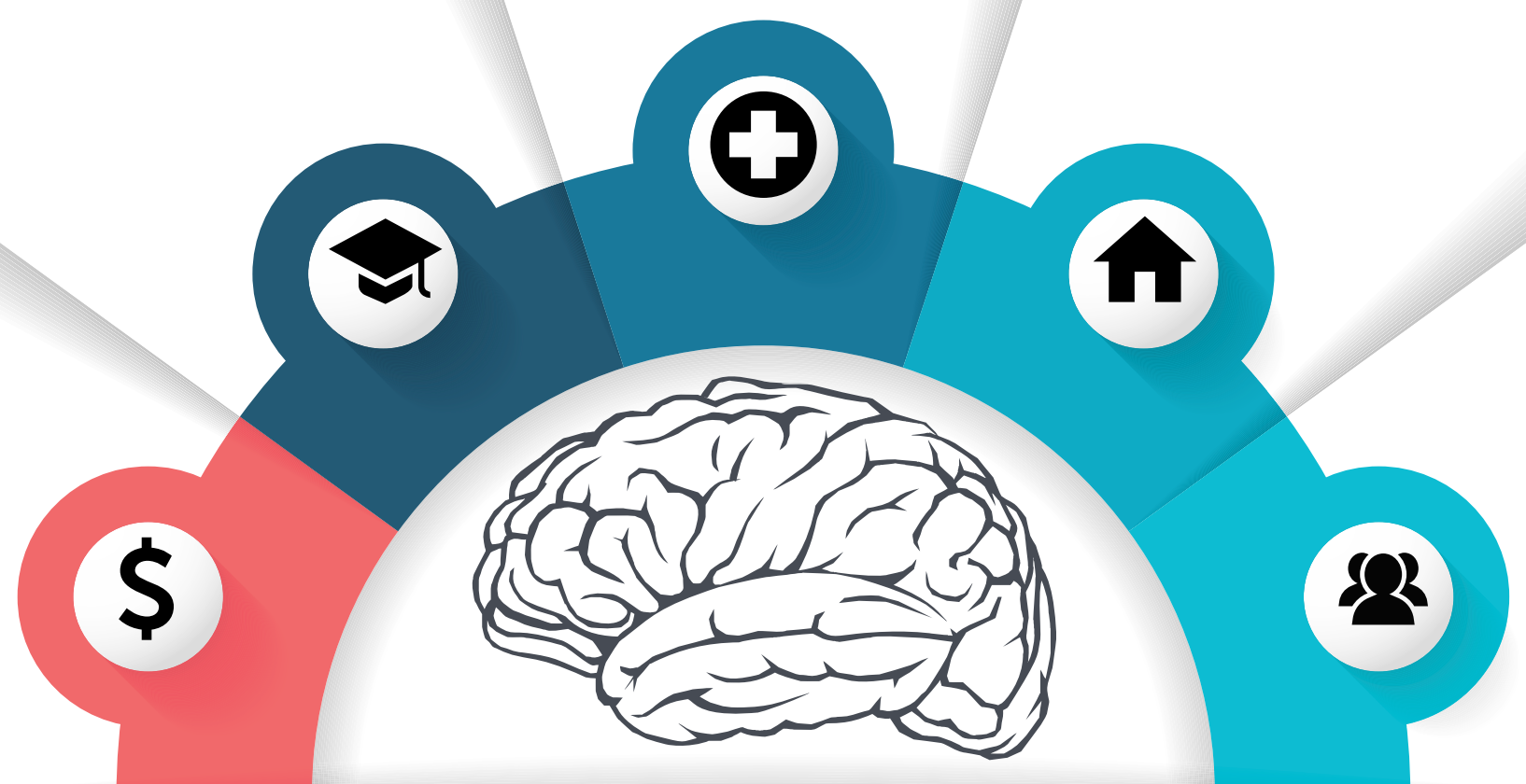
Individuals with a brain injury or any other chronic condition possess a lifetime of experiences. These past experiences and the present environment can significantly affect how they cope with their brain injury and influence their overall health. Collectively, these experiences and environments are known as non-medical drivers of health.
Subgroup members of the Moody Galveston Conference developed a seven part podcast series on the Non-Medical Drivers of Health, otherwise known as the Social Determinants of Health.
We encourage you to help distribute these valuable resources within your networks.
This product was developed with support from the 2023 Moody Galveston Brain Injury Conference (MGBIC) contributors, hosted by NASHIA, with funding from the Moody Endowment.
Episode 1 (Introduction: Importance of Non-Medical Drivers of Health)
Summary:
Introduction is the introductory episode of a podcast series on the importance of non-medical drivers of health, also known as social determinants of health, and brain injury. Featuring Dr. Kelli Gary Talley, Regina Rodriguez Sisneros, and Dr. Eliseo J. Pérez-Stable, former director of the National Institute on Minority Health and Health Disparities, the discussion highlights how race, ethnicity, disability, and social conditions intersect to create health inequities and underscores the need for greater awareness, research, and policy efforts to improve outcomes for underserved populations with brain injury.
Key Takeaway:
Addressing non-medical drivers of health is critical to reducing disparities and improving care, services, and outcomes for people with brain injuries, particularly those from historically underserved communities.
Episode 2 (Economic Stability)
Summary:
Economic Stability explores economic stability and brain injury, as Dr. Kelli Gary Talley moderates a discussion with Dr. Robert W. Turner, a researcher; Dr. Ana Durand-Sánchez, a physician; and family care partners, Bama Magassa (brother) and Marium Magassa (mother). Through both professional and lived-experience perspectives, the guests explore the substantial financial challenges that often follow brain injury, including loss of income, caregiver burden, insurance barriers, interstate differences in services, transportation challenges, and difficulties accessing long-term rehabilitation and support programs.
Key Takeaway:
Brain injury can create lasting economic hardship for both survivors and their families, making timely rehabilitation, accessible support services, caregiver resources, and coordinated systems of care essential for improving long-term recovery and quality of life.
Episode 3 (Education Access & Quality)
Summary:
Education Access and Quality focuses on education access and quality and brain injury, as Regina Rodriguez Sisneros moderates a discussion with Dr. Brenda Eagan-Johnson, Director of Pennsylvania’s BrainSTEPS program; Dr. Michael M. Green, a pediatric rehabilitation physician at the University of Utah; and LaShay Canady, a parent advocate and care partner of an adult daughter who sustained a traumatic brain injury in childhood. The speakers examine barriers to educational access following brain injury, including differences in funding across school districts, lack of educator training about brain injury, challenges navigating services and accommodations, stigma surrounding disability, and the need for stronger collaboration among healthcare providers, schools, families, and community support systems.
Key Takeaway:
Improving educational outcomes for individuals with brain injury requires early identification, better communication between healthcare and education systems, increased training for educators, and ongoing family-centered support to ensure equitable access to services and accommodations.
Episode 4 (Healthcare Access & Quality)
Summary:
Healthcare Access and Quality explores how health care access and quality affect people living with brain injury through perspectives from Dr. Cindy Ivanhoe, a brain injury physician, and Dr. Daniel Ignacio, a survivor. The discussion highlights how a number of factors, such as geographic location, insurance coverage, Medicaid policies, community reintegration, family support, and cultural factors can significantly influence long-term recovery and quality of life.
Key Takeaway:
Brain injury is a chronic condition, requiring ongoing individualized support beyond acute care and rehabilitation, with health care professionals encouraged to consider the whole person, their family, and the broader social and community factors that affect recovery.
Episode 5 (Neighborhood & Built Environment)
Summary:
Neighborhood and Built Environment focuses on neighborhood and built environment and brain injury, as Regina Rodriguez Sisneros moderates a discussion with Maria Martinez, a brain injury advocate and person with lived experience; Marchell Taylor, a traumatic brain injury advocate and peer specialist with lived experience who has personal and professional experience within the criminal justice system; and Dr. Anthony Young, a psychologist, brain injury survivor, and mental health advocate. Drawing on their lived and professional experiences, the speakers explore how neighborhood conditions, including poverty, violence, transportation barriers, housing instability, challenges accessing services in rural communities, cultural and language barriers, and limited community resources, can affect brain injury recovery, access to care, and overall quality of life.
Key Takeaway:
Recovery after brain injury is shaped not only by medical care but also by the environments in which people live, work, and seek support, making equitable access to transportation, housing, culturally responsive services, community resources, and advocacy essential for long-term health and quality of life.
Episode 6 (Social & Community Context)
Summary:
Social and Community Context focuses on social and community context and brain injury, Regina Rodriguez Sisneros moderates a discussion with Flower Sifuentes, a traumatic brain injury survivor, and Dr. Monica Verduzco-Gutierrez, a physician specializing in brain injury medicine. The discussants explore the critical role of family, friends, faith communities, peer support, healthcare providers, and community organizations in supporting recovery after brain injury. The discussion also highlights the importance of culturally responsive, trauma-informed care, addressing stigma surrounding invisible disabilities, and empowering individuals to define and access the supports that are most meaningful to their recovery, independence, and sense of belonging.
Key Takeaway:
Strong social and community supports, combined with culturally responsive and person-centered healthcare, can play a vital role in recovery after brain injury by fostering belonging, empowerment, hope, and improved long-term outcomes.
Episode 7 (Full Circle - Bringing It All Together)
Summary:
In this concluding episode, Drs. Angelle Sander and Monique Pappadis reflect on key insights from the podcast series on non-medical drivers of health and brain injury. Reflecting on the experiences shared by healthcare professionals, researchers, individuals with brain injury, and family care partners, they discuss how factors such as economic stability, educational access, healthcare access, neighborhood and environmental conditions, and social and community support shape recovery and long-term outcomes after brain injury. The conversation emphasizes the importance of self-advocacy, culturally responsive and trauma-informed care, community partnerships, and recognizing the broader social and environmental contexts that influence health and participation in everyday life.
Key Takeaway:
Medical care is an important component of long-term recovery, but improving outcomes requires addressing the social, economic, environmental, and community factors that shape recovery, access to services, and quality of life for individuals with brain injury and their families.