
Helping to Heal: Conversations About Trauma Informed Principles
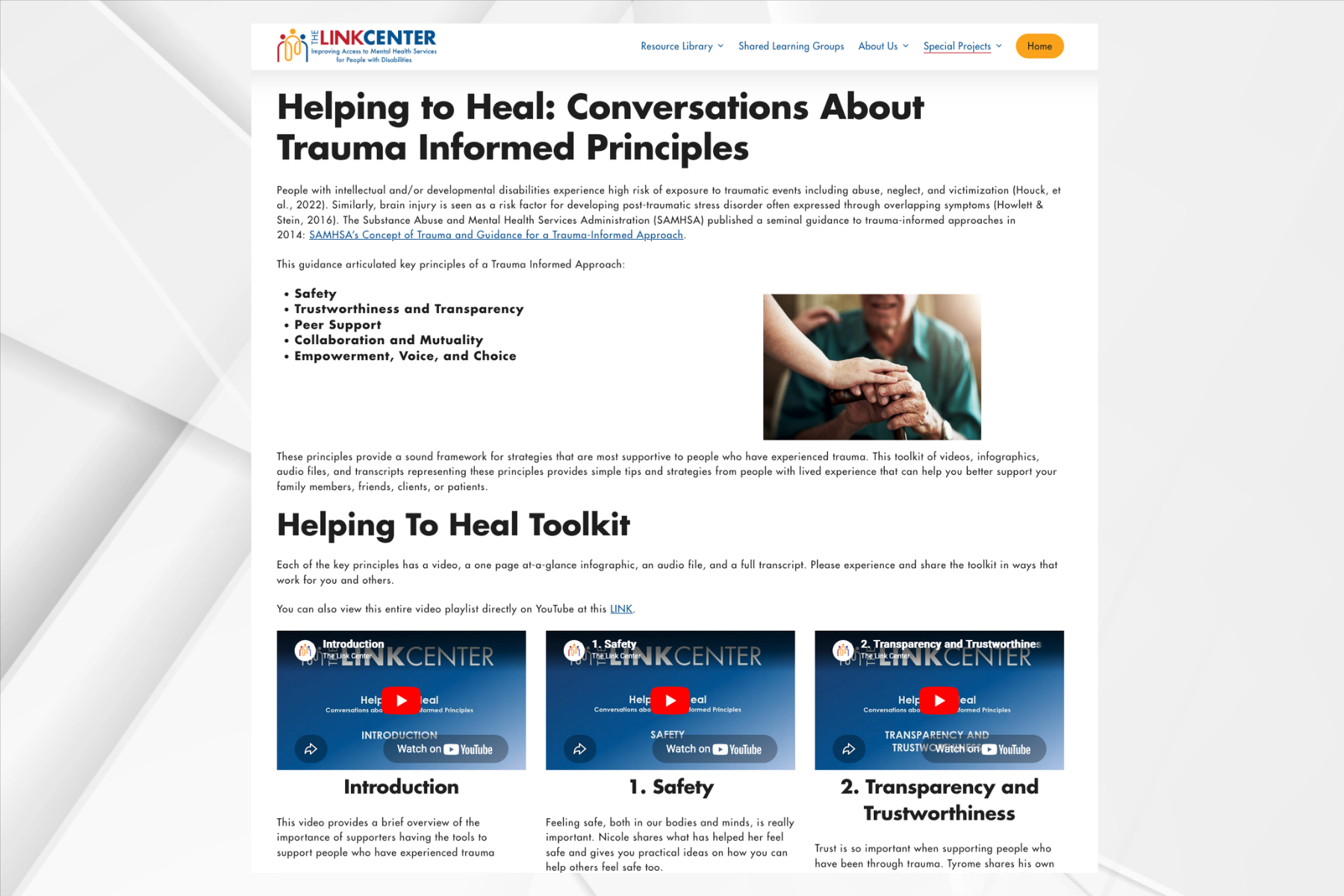
Along with their community allies and Steering Committee, the Link Center is proud to present the Helping to Heal Toolkit: Conversations About Trauma- Informed Principles.
People with intellectual and/or developmental disabilities experience a high risk of exposure to traumatic events, including abuse, neglect, and victimization (Houck et al., 2022). Similarly, brain injury is recognized as a risk factor for developing post-traumatic stress disorder, often expressed through overlapping symptoms (Howlett & Stein, 2016). In 2014, the Substance Abuse and Mental Health Services Administration (SAMHSA) published its seminal guidance, SAMHSA’s Concept of Trauma and Guidance for a Trauma-Informed Approach, which articulated the key principes of a Trauma-Informed Approach:
Safety
Trustworthiness and Transparency
Peer Support
Collaboration and Mutuality
Empowerment, Voice, and Choice
These principles provide a strong framework for strategies that best support people who have experienced trauma. This toolkit of videos, infographics, audio files, and transcripts representing these principles offers simple tips and strategies from people with lived experience of both trauma and disability to help you better support family members, friends, clients, or patients.
We encourage you to explore and share the resources in this toolkit widely to deepen understanding and strengthen trauma-informed support across communities.